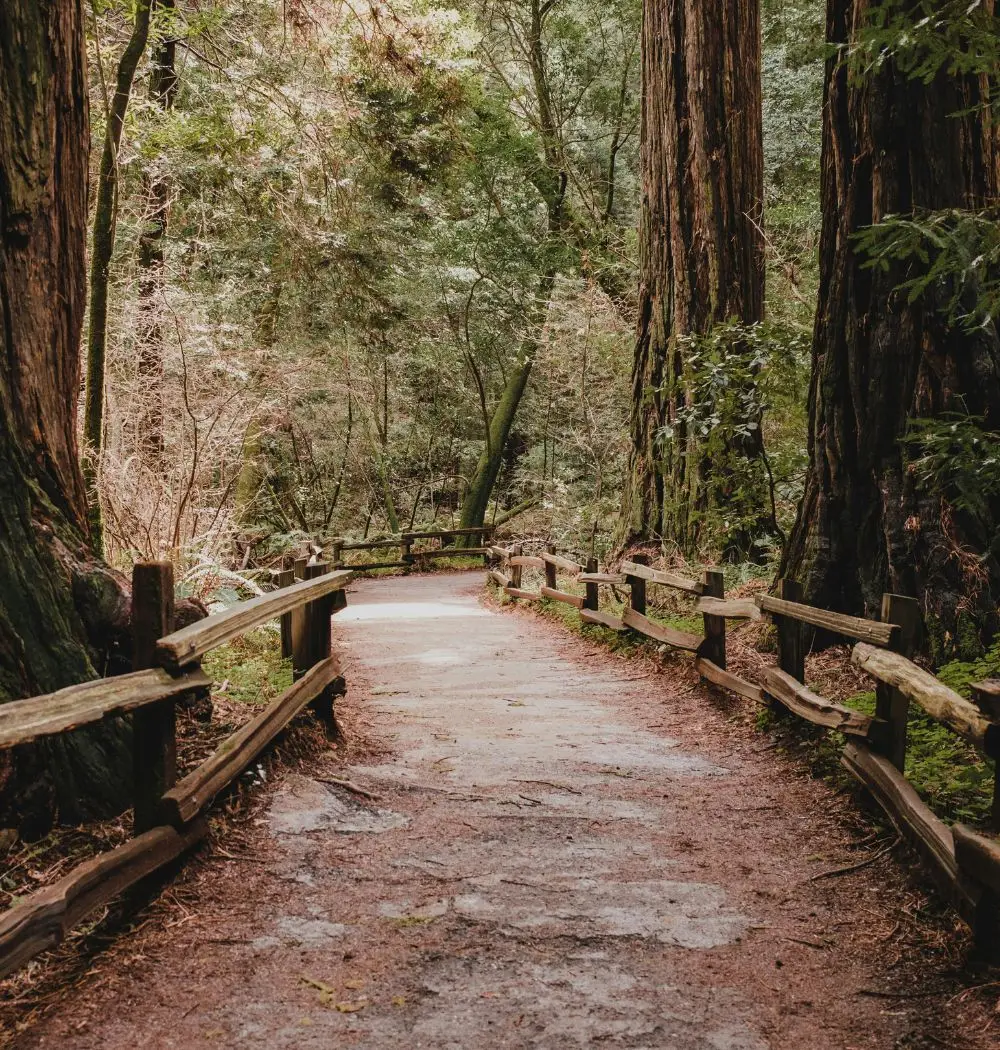
Have you ever stood at the edge of the ocean, watched a sunset, looked up at the stars or walked through the woods and thought, “How could this all happen by accident?” If you’re anything like me, you feel at peace when you’re completely surrounded by nature.
Being surrounded by a canopy of trees, a babbling brook or acres of mountains can make you feel so small, in the best way. It’s a reminder that you are just a tiny part in the bigger picture of what’s going on around you. It’s humbling and peaceful. And when you leave that space, your soul often craves it even more, as it’s thrown back into the often chaotic race of life.
Perhaps the reason we feel this way when surrounded by natural beauty is because God, the same creator who painted the sky and formed the mountains with his hand, created us too. Throughout the Bible, creation is used to reveal God’s character, divine power, beauty and creativity.
Nature reminds us that God is not distant. His fingerprints are woven throughout creation and can always point us back to Him. Christianity has never taught that nature itself IS God, but rather that creation REFLECTS the glory of its Creator.
Let’s dive into how God and nature are connected through Scripture and reflect on what we can learn from this.
Table of Contents
Scripture and Nature
These passages remind us that creation points beyond itself and reveals something beautiful about God.
“The Lord will guide you always; He will satisfy your needs in a sun-scorched land and will strengthen your frame. You will be like a well-watered garden, like a spring whose waters never fail.” -Isaiah 58:11 (NIV)
This verse is a stunning picture of God’s provision. Nature is used here to illustrate spiritual flourishing and God’s faithfulness to sustain His people. When we remain close to Him, He strengthens and refreshes us, even during difficult seasons.
“The heavens declare the glory of God, and the sky above proclaims his handiwork.” -Psalm 19:1 (ESV)
This verse reminds us that creation speaks quietly of God’s creativity. We can look at the sky and be reminded of how big our God is and how He alone created the Heavens and the earth.
“For since the creation of the world God’s invisible qualities—his eternal power and divine nature — have been clearly seen.” -Romans 1:20 (NIV)
Nature is a reminder that God is both powerful and personal. He is in control of all things.
“Look at the birds of the air … your heavenly Father feeds them.” -Matthew 6:26 (CSB)
Jesus often pointed toward nature to teach lessons about trust and dependence on God. We can take heart knowing that if our heavenly Father takes time to think about the birds in the sky, He surely is thinking and caring for us as well.
“Just ask the animals, and they will teach you. Ask the birds of the sky, and they will tell you. Speak to the earth, and it will instruct you. Let the fish in the sea speak to you. For they all know that my disaster has come from the hand of the Lord. For the life of every living thing is in his hand, and the breath of every human being.” – Job 12:7–11 (NLT)
This passage reminds us that creation itself points to God’s authority and provision. When we look at the natural world, we are reminded that all life ultimately comes from Him.
“He makes grass grow for the cattle and plants for people to cultivate.” -Psalm 104:14 (NIV)
This verse highlights how God is capable of not only providing food for the cattle, but he’s capable of providing the needs for every person on earth. God’s provision is visible in the rhythms of the natural world.
“He is like a tree planted by streams of water that yields its fruit in its season, and its leaf does not wither.” -Psalm 1:3 (ESV)
This scripture shows us an example of stability and nourishment when we stay connected to God. A tree that yields fruit is usually sturdy, with deep roots. Storms may come and seasons may change, but God provides the strength needed to remain steady and bear lasting fruit.
Quotes About God and Nature
These quotes, while not from Scripture in the Bible, affirm the connection between God and nature.
“Nature is God’s living, visible garment.” -Johann Wolfgang von Goethe
“My profession is always to be alert, to find God in nature, to know God’s lurking places, to attend to all the oratorios and the operas in nature.” -Henry David Thoreau
“I love to think of nature as an unlimited broadcasting system through which God speaks to us every hour, if we only tune in” -George Washington Carver
“Nature is too thin a screen; the glory of the omnipresent God bursts through everywhere.” -Ralph Waldo Emerson
Daily Reflection Questions
Step outside today and reflect on the nature around you. Take a walk, sit outside, or spend a few moments somewhere quiet.
- Where do I feel closest to God in nature?
- What does creation reveal to me about God’s character?
- Do I create enough space in my life to slow down and notice God’s presence?
- What part of nature most reminds me of God’s faithfulness?
- How can I become more intentional about slowing down and noticing God through creation in my daily life?
A Prayer for Seeing God Through Creation
“Lord, thank You for creating a world that reflects Your beauty, creativity, and care. I ask that you would help me slow down long enough to notice You in the world around me.
Allow nature to be a reminder to me that I am so small, and You are in control of all things. Open my eyes to how You are sustaining all things, at all times.
Teach me to delight in the beauty You created while keeping my eyes fixed on You. Thank you, Jesus for the beauty you allow us to see every single day, may I never take it for granted. Amen.”
References: Bible Verses Used & Translation List
- Isaiah 58:11 (NIV)
- Psalm 19:1 (ESV)
- Romans 1:20 (NIV)
- Matthew 6:26 (CSB)
- Job 12:7–10 (NLT)
- Psalm 104:14 (NIV)
- Psalm 1:3 (ESV)
All Scripture quotations included on this website are property of their respective copyright holders. For more information on specific translation permissions, please see our Copyright Statement.